SBCI Loans Ireland: Rates, Eligibility & How to Apply (2026)

Alan Bermingham
10 Years in non banking finance
Published:
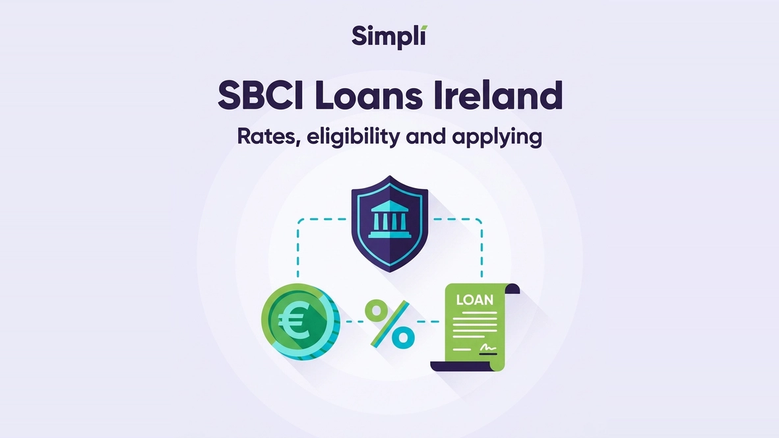
At Simpli Finance, the very first question we put to any client who might qualify for business finance is this: have you checked your SBCI eligibility? There's a good reason for that. SBCI-backed loans carry the lowest interest rates available to Irish SMEs, and over a five- or ten-year term the saving is huge. Borrow €250,000 over seven years and the gap between a 4% SBCI rate and a standard 9% bank rate is more than €45,000 in total interest. That's not loose change. It's material.
Here's the catch, though: the SBCI doesn't lend to you directly. It hands low-cost funding to participating banks and lenders, who pass it on as preferential rates to businesses that qualify. So you access SBCI lending through your bank: but not every loan your bank offers is SBCI-backed, and not every business qualifies. Let's unpack how it works, who's eligible, and how to actually get it.
- SBCI-backed loans offer the lowest business finance rates in Ireland, from 4% APR.
- The Growth and Sustainability Loan Scheme lends €10,000-€3 million for terms of up to 10 years.
- You apply through AIB, Bank of Ireland, or PTSB. And must ask specifically for an SBCI assessment.
- Eligibility requires SME status and not being in financial difficulty; you still meet the bank's own credit criteria.
What Is the SBCI
The Strategic Banking Corporation of Ireland (SBCI) is a state-owned financial institution set up in 2014 to get low-cost funding into the hands of Irish SMEs. It's backed by the European Investment Bank, the KfW German development bank, and the Irish government. Its job is simple: improve access to finance for Irish businesses and bring the cost of that finance down by channelling cheaper European capital through the domestic banking system.
The SBCI works through on-lenders. Currently AIB, Bank of Ireland, PTSB and a few others depending on the scheme. When you apply for an SBCI-backed loan, you're really applying to one of these participating lenders. They check both their own standard criteria and the SBCI eligibility rules, and if you tick both boxes, you get the SBCI-backed rate.
Growth and Sustainability Loan Scheme
The Growth and Sustainability Loan Scheme (GSLS) is the flagship SBCI product in 2026. It offers loans from €10,000 to €3 million at rates from 4% APR, with terms of up to ten years. It's open to SMEs and small mid-caps (fewer than 500 employees) for a wide range of purposes: growth investment, working capital, equipment, premises improvement, and sustainability measures.
It really shines on larger capital investments, where the rate gap between an SBCI loan and a standard bank loan stacks up over the term. Fund a €500,000 equipment investment at 4% over ten years instead of 9% and you're looking at roughly €150,000 in interest savings. A serious dent in the total cost.
Who Is Eligible
To qualify, your business needs to be an SME: generally fewer than 250 employees, turnover under €50 million, and a balance sheet total under €43 million. You can't be in financial difficulty when you apply, and certain sectors and loan purposes are off the table: SBCI funds can't be used for purely speculative activity, for refinancing existing debt without new investment, or for anything outside the specific scheme's scope.
And here's something people miss: clearing the SBCI eligibility test doesn't guarantee approval. You still have to meet the participating lender's own credit criteria: trading history, CCR, Revenue compliance, and the ability to service the debt. SBCI eligibility is an extra qualifying layer on top of creditworthiness, not a replacement for it.
What Can You Use the Loan For
So what can you actually spend it on? SBCI loans fund growth investment (new equipment, premises fit-out, technology), working capital, sustainability measures (energy efficiency upgrades, renewable energy), and business development. The scheme is built for productive investment: it's not there for financial restructuring without new investment, dividend payments, or anything deemed ineligible under EU state aid rules.
Participating Lenders
The main participating SBCI lenders in Ireland are AIB, Bank of Ireland, and PTSB, all of which have SBCI-trained teams who can assess eligibility and apply the rate where it fits. Some schemes have also been accessed through specialist lenders and credit institutions. For the full, up-to-date list on any given scheme, check the SBCI website at sbci.gov.ie.
- ✓SME size. Fewer than 250 employees
- ✓Loan for eligible use (growth, sustainability)
- ✓Clean CCR and Revenue compliance
- ✓CRO filings current and accounts available
- ✗Business in financial difficulty at time of application
- ✗Loan for refinancing existing debt only
- ✗Business exceeds SME size thresholds
- ✗Purpose not eligible under the scheme criteria
SBCI vs Standard Bank Loan
The single biggest difference between an SBCI-backed loan and a standard bank term loanis the rate. Typically 3-5 percentage points lower for the same loan from the same bank. The terms tend to be longer too (up to ten years versus the usual five to seven). The application process is identical, you go to your bank, but you have to specifically ask about SBCI eligibility rather than assume they'll offer it.
Some banks now check SBCI eligibility automatically as part of standard business lending, but it's still worth explicitly asking if you think you qualify. A broker like Simpli Finance will always flag SBCI eligibility before submitting any business loan application to a participating lender.
FAQ: SBCI Loans Ireland
What is the SBCI and how does it work?
The Strategic Banking Corporation of Ireland (SBCI) is a state-owned financial institution that provides low-cost funding to participating lenders, AIB, Bank of Ireland, PTSB, and others, who then lend it to qualifying SMEs at preferential rates. The SBCI does not lend directly to businesses. You apply to a participating lender, which assesses your application and, if you qualify under the SBCI criteria, offers the SBCI-backed rate.
Who is eligible for an SBCI loan in Ireland?
Eligible businesses must be SMEs: defined as fewer than 250 employees, annual turnover under €50 million, and balance sheet under €43 million. The business must not be in financial difficulty, must be using the funds for an eligible purpose (growth, productivity, sustainability), and must meet the standard lending criteria of the participating lender. Agricultural businesses have specific eligibility rules under separate SBCI schemes.
How much cheaper is an SBCI loan compared to a standard bank loan?
SBCI-backed rates start from approximately 4% APR, compared to 7.5-12% for standard business term loans from the same banks. On a €200,000 loan over 7 years, this difference equates to tens of thousands of euro in total interest savings. The SBCI rate saving is one of the most significant financial advantages available to qualifying Irish SMEs and should always be explored before accepting a standard rate.
Can I refinance existing debt with an SBCI loan?
SBCI loans cannot be used solely to refinance existing debt. The funds must be used for new productive purposes: growth, investment, working capital, sustainability measures, or productivity improvements. However, an SBCI loan can refinance existing debt if it also includes new investment: for example, refinancing an older term loan while simultaneously funding a new equipment purchase. The proportion of new investment typically needs to be material.
Should You Pursue an SBCI Loan?
The SBCI is one of the most valuable resources going for qualifying Irish SMEs. The rate advantage can save you tens of thousands over the life of a loan, and the longer terms ease your monthly repayments and your cash flow. Bottom line: if you're considering a bank loan, verify SBCI eligibility before you accept a standard rate.
At Simpli Finance, SBCI eligibility is always the first thing we check. If you qualify, we make sure you get the SBCI rate. If you don't, we find you the next best option.
Get in touch today. The first call is free, and there's no obligation.