Short-Term Business Loans Ireland: Fast Finance When You Need It (2026)

Alan Bermingham
10 Years in non banking finance
Published:
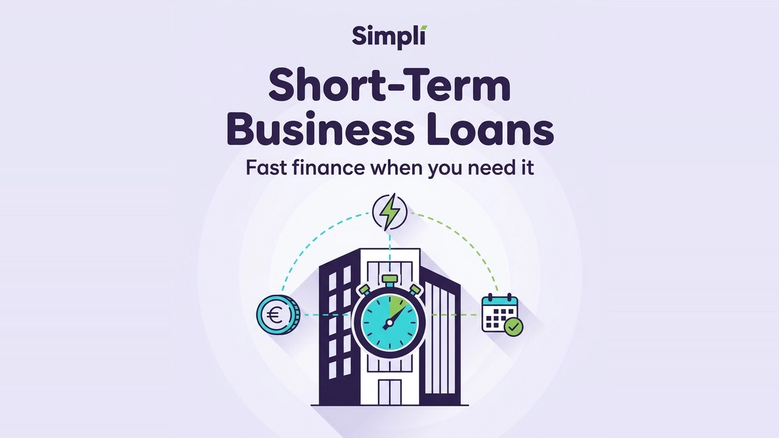
At Simpli Finance, short-term finance is the product that moves fastest. And sometimes that speed is everything. Picture it: you need €50,000 this week for a stock buy, a payroll gap, or a deal that won't wait. A bank can't help you there; they think in weeks, not days. That's exactly the gap short-term business lending from alternative providers fills in the Irish market.
And it's no niche product, either. Thousands of Irish businesses use it every year to smooth out cash flow gaps, fund seasonal build-up, grab a supplier deal, or bridge the wait between signing a contract and getting paid. The trick is using it for the right reasons. And knowing the true cost before you sign.
- Short-term finance covers facilities repaid within about 24 months: revenue-based loans, merchant cash advances, invoice and bridging finance.
- Decisions typically come within days, based on bank-statement data, with no hard CCR check.
- It costs more than bank lending and only suits genuinely short-term needs with a clear repayment event.
- A €50,000 advance at a factor of 1.30 costs €15,000. Worth it only if the capital generates more than that.
What Counts as Short-Term Business Finance
Broadly, short-term business finance means any facility you repay within about 24 months. That covers revenue-based loans from alternative lenders (usually 6 to 18 months), merchant cash advances (repaid through your daily card takings, typically inside 12 months), invoice finance (revolving, with each advance cleared when the invoice is paid), and bridging finance (short-term, property-backed lending for specific transactions).
The one thing they all share? Speed. Alternative lenders assess these facilities mostly on bank statement data, so decisions land within days. That speed costs you, short-term products are pricier than long-term bank lending, but for the right business in the right moment, the cost of not having the cash can dwarf the cost of the facility itself.
When to Use Short-Term Finance
Short-term finance shines when the need is genuinely short-term. A seasonal business needing €80,000 in September to stock up before its October-November peak, expecting to be paid off by January? Textbook. A construction firm that's won a big contract but has to cover wages and materials for six weeks before the first draw-down? Same thing. In both cases there's a visible revenue event coming that clears the facility. The finance just bridges the timing.
Where it goes wrong is when the underlying need is actually permanent. If you need capital for a long-term equipment investment or an office build-out, don't reach for a six-month revenue-based loan. Go for a five-to-seven-year term loan, ideally SBCI-backed. Using short-term products for long-term needs is one of the most expensive mistakes in business finance, full stop.
Your Options for Short-Term Finance in Ireland
Revenue-based lendingis the most versatile short-term option if you've got steady monthly revenue. Lenders like 365 Finance and Grid Finance advance €10,000 to €500,000 off the back of bank statement analysis, with repayments set as a percentage of your monthly income. Terms usually run 6 to 18 months. No hard CCR check, no collateral, decisions within days.
Merchant cash advances suit businesses with strong card-terminal revenue, since repayment runs automatically through daily card receipts. Invoice finance turns unpaid invoices into immediate cash. Perfect for B2B businesses stuck waiting on payment. And bridging finance offers short-term loans secured against property for specific transactions. Each has its own sweet spot, and picking the right one for your situation keeps the cost down.
True Cost of Short-Term Finance
Let's be honest about the cost, because you need to understand it before committing. A revenue-based advance of €50,000 at a factor of 1.30 costs you €15,000 in total. Repay it over nine months and the effective APR works out around 70%. Sounds brutal next to a bank term loan at 8%: but that comparison isn't really fair, because the bank loan either wasn't available in that timeframe or was declined outright. The real question is simpler: will that capital generate more than €15,000 of value for the business? When short-term finance is genuinely the right call, the answer is usually yes.
- ✓Bridge a temporary cash flow gap
- ✓Fund a time-sensitive opportunity
- ✓Cover seasonal working capital needs
- ✓Avoid a long-term commitment for a short-term need
- ✗Capital investment with a 5+ year payback
- ✗You qualify for SBCI rates. Use them
- ✗Predictable, recurring need for capital
- ✗Total cost of short-term exceeds value of speed
Fintechs for Fast Decisions in Ireland
365 Finance and Grid Finance are the busiest short-term business lenders in Ireland right now. Both assess on bank statement data and turn around decisions within days. 365 Finance runs mainly on a revenue-based model, with advances from €10,000 to €500,000. Grid Finance covers a similar range with a particular soft spot for growth-stage businesses. We work with both and can submit applications on your behalf from a single set of documents.
The process is refreshingly simple: hand over three to six months of business bank statements, give basic business and director details, and you'll get an indicative offer within days. Accept it and the funds usually land the same week. No endless forms, no property valuations, no waiting on a bank credit committee.
FAQ: Short-Term Business Loans Ireland
What counts as a short-term business loan in Ireland?
Short-term business finance generally refers to any facility with a repayment period of 24 months or less. This includes revenue-based loans (typically 6-18 months), merchant cash advances (no fixed term but usually repaid within 12 months), invoice finance, and bridging finance. Some lenders also offer short-term term loans with fixed 12 or 24 month terms, often with more flexible eligibility criteria than longer-term products.
Is short-term business finance more expensive than a bank loan?
Yes. Almost always. Short-term products from alternative lenders use factor rates or higher APR because of the speed and flexibility they offer, the lower documentation burden, and the higher risk associated with shorter-term, unsecured lending. The question to ask is not whether the cost is higher than a bank loan, it is, but whether the value of the capital exceeds the cost of accessing it on a short-term basis.
Can I get a short-term business loan with bad credit in Ireland?
Yes. Short-term alternative lenders typically perform soft CCR checks or no CCR check at all. They assess applications primarily on business bank statement performance. Revenue-based lenders and merchant cash advance providers regularly approve businesses with imperfect CCR records, provided the business has consistent monthly revenue and Revenue Commissioners compliance is in order.
How do I avoid being trapped in a cycle of short-term debt?
Use short-term finance for short-term needs. Not as a substitute for the long-term capital your business actually requires. If you find yourself renewing short-term facilities repeatedly without the underlying cash flow need improving, the business needs a longer-term solution. A broker can help you identify whether a longer-term facility, perhaps SBCI-backed, would be cheaper and more appropriate in the medium term.
Is Short-Term Finance Right for You?
Short-term business finance is a legitimate, widely used tool for Irish businesses that need capital quickly. Yes, it costs more than bank lending: but the speed, accessibility, and flexibility can deliver returns that comfortably outweigh that cost. The whole thing hinges on using it appropriately: for genuine short-term needs where a visible revenue event will repay the facility.
At Simpli Finance, we match the right short-term product to the right need: and just as importantly, we'll tell you when short-term finance isn't the answer and a longer-term solution would serve you better.
Get in touch today. The first call is free, and there's no obligation.