SME Finance in Ireland: Options That Actually Work (must read for owners)

Alan Bermingham
10 Years in non banking finance
Published:
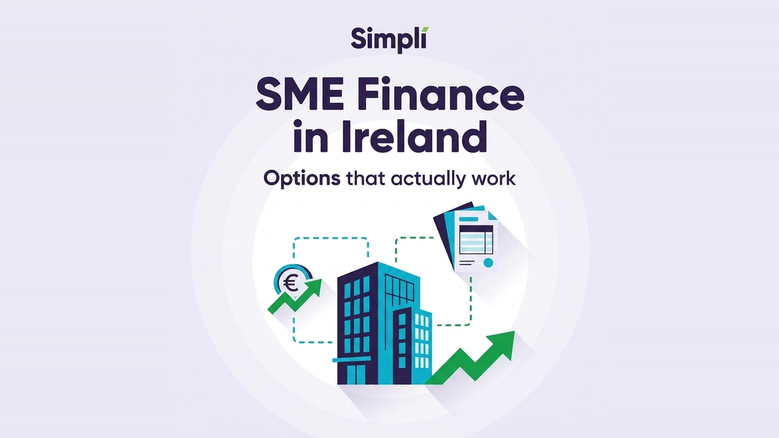
Ever felt like getting SME finance in Ireland is a maze with no exit? We've spent the last decade helping business owners just like you find their way through it, and the honest answer is that the maze has more doors than most owners realise.
The problem isn't a lack of funding. It's that nobody hands you the full menu. Your bank shows you their products, a fintech shows you theirs, and you're left comparing apples to oranges with your working capital on the line.
This guide is the full menu. We'll walk through every serious SME funding route available in Ireland in 2026, term loans, invoice finance, asset finance, revenue-based lending, SBCI-backed schemes and grants, and tell you when each one actually makes sense, based on the deals we see cross our desk every week.
- Irish SMEs in 2026 have at least six serious funding routes, and the cheapest option on paper is often the wrong fit for the job.
- Match the finance to the purpose: term loans for planned investment, invoice finance for cash flow gaps, asset finance for equipment and vehicles.
- SBCI-backed schemes carry a government guarantee of up to 80%, which unlocks bank-level rates without property security on smaller amounts.
- Lenders approve prepared businesses: clean tax affairs, up-to-date accounts and a realistic cash flow forecast do more than any interest rate haggling.
Understanding SME Finance in Ireland: The 2026 Landscape
SME finance is the lifeblood of Irish business growth. In ten years of brokering deals, we've seen how the right funding at the right moment turns a steady business into a growing one, and how the wrong product at the wrong time drags a good business under.
The good news is that Irish SME funding in 2026 is more flexible than it has ever been. You've still got traditional bank lending, but sitting alongside it are fintech lenders, invoice finance houses, revenue-based lenders and government-backed schemes, all competing for your business.
The economic climate is a mixed bag. Lenders are cautious, but there's real appetite for strong business cases, and a straightforward fixed term loan remains the backbone product for most planned investment. The trick is knowing which door to knock on first, because the right lender for a €15,000 cash flow gap is rarely the right lender for a €200,000 expansion.
Here's the full menu, one option at a time.
Term Loans: The Workhorse for Planned Investment
A term loan is exactly what it sounds like: you borrow a lump sum and repay it in fixed instalments over one to five years, sometimes longer. Rates in 2026 typically run from around 6% with the pillar banks to the low teens with faster alternative lenders.
When to use it: any planned, one-off investment where you know the cost upfront. A fit-out, a rebrand, a new location, hiring ahead of a contract. If you can name the amount and the purpose, a term loan is usually the cheapest structured way to fund it.
When to avoid it: recurring cash flow gaps. Borrowing a lump sum to plug a hole that reopens every quarter just stacks debt on a structural problem.
The pillar banks are slow and thorough, often six to eight weeks, while alternative lenders assess three to six months of bank statements and move in days. Our full guide to business loans in Ireland compares the lenders, rates and criteria in detail.
Invoice Finance: Unlock the Cash Sitting in Unpaid Invoices
If you invoice other businesses on 30, 60 or 90 day terms, you're effectively lending your customers money interest-free while you wait to get paid. Invoice finance flips that: a funder advances you 70% to 90% of each invoice value straight away, and you get the balance, less fees, when your customer pays.
When to use it: B2B businesses with good customers but slow payers. Recruitment, wholesale, haulage, construction subcontracting and manufacturing are the classic fits. Because the facility grows with your sales ledger, it scales automatically as you win bigger contracts.
When to avoid it: if you sell direct to consumers or take payment upfront, there's no ledger to fund. And if your margins are already razor thin, the fees need careful weighing.
We've seen this product rescue more growing businesses than any other. The step-by-step process, costs and pitfalls are covered in our guide to getting invoice finance in Ireland.
Asset Finance: Fund Equipment and Vehicles Without Draining Cash
Asset finance uses the thing you're buying, a van, a machine, kitchen equipment, as the security for the loan. Because the lender can recover the asset, approval is easier and you keep your cash reserves for stock and wages.
When to use it: any time you're buying equipment or vehicles that will earn their keep over several years. Spreading €60,000 of machinery over five years at a fixed monthly cost almost always beats emptying the current account.
There's a second version worth knowing: if you already own valuable equipment outright, you can release cash against it. That's asset-based lending, and it's a genuinely underused route for asset-rich, cash-poor businesses.
When to avoid it: short-life assets. Don't finance something over five years if it'll be obsolete in two. For the buying side, our equipment finance guide covers rates, terms and how lenders value different asset types.
Revenue-Based Lending: Repayments That Flex With Your Sales
Revenue-based lending (RBL) advances you a lump sum, and you repay it as a fixed percentage of your sales, typically collected daily or weekly. Strong month, you repay more. Quiet month, you repay less.
When to use it: businesses with healthy card or online turnover and seasonal swings. Hospitality, retail and e-commerce are the natural fits, because the repayment breathes with the till. Approval is based on your sales data, so it's also one of the fastest routes when a bank has said no or you need to move on stock quickly.
When to avoid it: thin-margin businesses. The convenience costs more than a term loan, and if your margins can't absorb the factor rate, the flexibility isn't worth it. The related merchant cash advance works the same way against card takings specifically, and the same margin maths applies.
We take RBL deals to lenders every week, and the approvals come fast when the sales data is clean. Our guide to revenue-based lending in Ireland breaks down the real cost so you can compare it properly against a bank loan.
SBCI and Government-Backed Loans: Bank Rates, Less Security
The Strategic Banking Corporation of Ireland doesn't lend directly. It guarantees a chunk of your loan, up to 80% under current schemes, so participating lenders can offer lower rates and lighter security requirements than they otherwise would.
When to use it: growth and sustainability investment, especially if you'd struggle to offer property security. On smaller amounts a personal guarantee is often enough, and the rates undercut standard term loans. First-time borrowers and younger businesses do noticeably better here than at a pillar bank's front door.
When to avoid it: urgent needs. The schemes involve an eligibility step before the lender application, so budget weeks, not days. The current schemes, eligibility rules and application steps are all in our guide to SBCI loans in Ireland.
Grants and Government Supports: Money You Don't Repay
Grants are the only funding on this list you never pay back, which is exactly why they're competitive and paperwork-heavy. The Local Enterprise Offices, Enterprise Ireland and a rotating cast of national schemes fund everything from feasibility studies to energy upgrades and digital marketing.
When to use it: alongside borrowed money, not instead of it. The businesses we see win grants treat them as a co-funding layer, a grant covers 50% of a project and finance covers the rest. Priming grants, trading online vouchers and green transition funding are the ones Irish SMEs actually land most often.
When to avoid it: never avoid them, but never build a plan that depends on one arriving. Schemes change often and decisions take months. Our roundup of government business grants in Ireland lists what's live in 2026 and who qualifies.
How to Choose the Right SME Finance Option
Start with the purpose, not the product. In our experience, owners who lead with "I need €50,000" get worse outcomes than owners who lead with "I need to bridge 60-day payment terms on a new contract". The purpose points at the product.
A rough map from the deals we broker: planned one-off investment points to a term loan or SBCI scheme. Slow-paying customers point to invoice finance. Equipment points to asset finance. Seasonal sales swings point to revenue-based lending. Day-to-day gaps between paying suppliers and getting paid point to working capital finance. And if you're pre-revenue or very early stage, the criteria shift entirely, and startup lending becomes a category of its own.
Then compare the true cost, not just the headline rate. Watch for arrangement fees, early repayment penalties and personal guarantee requirements. A 7% loan with heavy fees can cost more than a 9% loan without them.
Finally, get your paperwork straight before you apply anywhere. Filed accounts, six months of bank statements, tax clearance and a simple cash flow forecast. The single most common reason we see fundable Irish businesses get declined isn't the business, it's the shoebox of receipts where the documentation should be.
Common Mistakes Irish SME Owners Make When Seeking Finance
We've seen too many owners rush into the first offer without reading the fine print. Hidden fees and rigid repayment terms can strangle cash flow, so always ask for the total cost of credit in euro, not just the rate.
Another big one: applying to the wrong lender for the situation, then letting the decline knock their confidence. A bank refusal says nothing about whether an invoice finance house or an SBCI-backed lender would say yes to the same business.
And don't ignore your credit record, business or personal. Lenders will pull your Central Credit Register file, so check it first and get any old arrears explained or corrected before they find them.
Final Thoughts
Choosing the right SME finance option in Ireland can be a game-changer for your business. The market in 2026 rewards owners who know the full menu: term loans for planned moves, invoice finance for slow payers, asset finance for equipment, RBL for seasonal trade, SBCI schemes for cheaper growth money, and grants layered on top.
You don't need to become a finance expert. You need to match the product to the purpose, walk in prepared, and go to lenders who actually want your type of business. That last part is where a broker earns their keep, because we already know who's saying yes this month.
Book your free consultation with Simplí Finance and let's get your business funded for real growth in 2026.
Frequently Asked Questions
What documents are needed to apply for SME finance?
You'll usually need your recent financial statements, six months of bank statements, tax clearance and proof of identity. For larger amounts, add a business plan and a cash flow forecast. Having everything ready before you apply is the single biggest thing that speeds up approval.
How long does it take to get approved for a business loan?
Pillar banks typically take six to eight weeks, longer if information is missing. Alternative lenders assessing bank statement data can approve in days, and revenue-based lenders are often the fastest of all because they work straight from your sales figures.
Are there grants available for Irish SMEs in 2026?
Yes. The Local Enterprise Offices, Enterprise Ireland and national schemes fund feasibility work, digital projects and energy upgrades. Schemes change often, so check what's currently open before building them into your plans, and treat grants as a co-funding layer rather than your whole strategy.
What's the difference between traditional and alternative finance?
Traditional finance, like bank term loans, means stricter criteria, more paperwork and lower rates. Alternative finance, like invoice finance and revenue-based lending, means faster decisions, lighter criteria and higher cost. Most growing SMEs end up using a blend of both.