Leasing vs Buying a Van in Ireland: Which Works Out Cheaper for Your Business?

Gary Grimes
CEO & Founder | Head Of Revenue at Simplí Finance
Published:
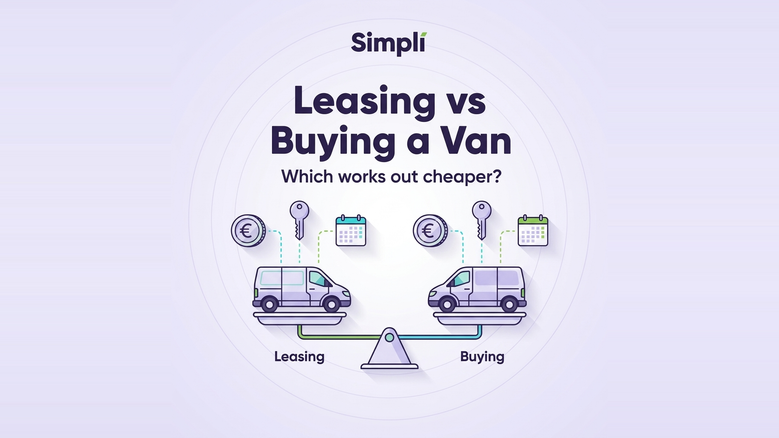
Should your business lease a van or buy one outright? It is one of the most practical financial questions Irish business owners face, and the right answer depends heavily on your cash position, tax setup, and how long you intend to keep the vehicle.
The instinct to own is strong, particularly for sole traders and small businesses. But ownership is not always the most cost-effective option once you account for depreciation, cash tied up, and tax treatment. This guide compares the numbers honestly.
The Core Financial Difference
Buying a van ties capital in the asset. Leasing preserves that capital and converts vehicle cost into a predictable monthly expense. For a business with €40,000 available, buying a van with that cash means €40,000 is no longer available for stock, staff, marketing, or emergencies.
Leasing the same van at €350 per month means keeping the €40,000 working in the business. Over three years the lease costs approximately €12,600 in payments plus an initial rental. The €40,000 in the business could generate returns, cover cash flow gaps, or fund growth that more than offsets the lease cost.
This is the argument for leasing. The argument for buying is simpler: eventually the payments stop, you own the van, and your monthly costs drop. It also removes the mileage and condition restrictions that come with every lease agreement.
Tax Treatment: Leasing vs Buying in Ireland
This is where the biggest practical difference lies for Irish businesses, and it is frequently misunderstood.
If you lease a commercial van, your monthly lease payments are fully deductible as a business expense against your corporation tax or income tax bill. A €350 monthly payment is €350 of deductible expense every month, immediately. For a 20% tax rate taxpayer, that is worth €70 per month in tax relief straight away.
If you buy the van, you claim capital allowances under Section 284 of the Taxes Consolidation Act. Commercial vans qualify for the full rate: 12.5% of the cost per year over eight years. On a €40,000 van, that is €5,000 per year in deductible depreciation, worth €1,000 per year in tax relief at 20%. The full tax benefit takes eight years to realise, not immediately.
| Lease a Van | Buy Outright | |
|---|---|---|
| Upfront cash required | Initial rental only (1-3 months) | Full purchase price |
| Monthly cash flow | Fixed monthly payment | No payments (if bought cash) |
| Tax relief timing | Immediate, full deduction monthly | Over 8 years via capital allowances |
| VAT recovery | 100% on payments (business use) | 100% on purchase (business use) |
| Depreciation risk | None, lender carries it | Yours, van loses 40-50% in 3 years |
| Mileage restrictions | Yes, agreed in contract | None, your van |
| End of term | Hand back, no asset | Own the van, must manage resale |
When Buying Makes More Sense
Buying is financially better when you intend to keep the van for longer than five years, when mileage is high enough to make lease restrictions unworkable, or when you have a specific use case that would attract excessive damage charges on a leased vehicle.
Tradespeople working on construction sites with muddy lanes, landscapers loading and unloading heavy equipment regularly, or any business where internal van condition is genuinely difficult to maintain to lease standards will find buying gives more operational freedom. The cost of damage charges and excess mileage on a lease can erode the capital advantage of leasing significantly.
Owning the van also builds a business asset that appears on the balance sheet, which can matter when presenting accounts to a bank for a business loan application.
When Leasing Makes More Sense
Leasing wins when capital preservation matters more than asset accumulation. A growing business that needs cash available for other investments will typically get more value from a leased van than from owning one outright.
For businesses replacing vehicles every three to four years anyway, buying and selling creates resale admin, uncertainty about trade-in values, and a loss of the gap between what you paid and what the market offers at trade-in. Leasing removes this entirely. You hand back, you move on.
- -Cash flow and working capital preservation matters more than asset ownership
- -You replace vehicles every 3 to 4 years anyway
- -You are VAT-registered and can reclaim 100% of payments
- -Mileage is predictable and within standard lease limits
- -You intend to keep the van for 5 or more years
- -Mileage is high or routes are unpredictable
- -The vehicle will be used in ways that cause above-average wear
- -Building balance sheet asset value is a priority
FAQ: Leasing vs Buying a Van in Ireland
Is it better to lease or buy a van for tax purposes in Ireland?
For most SMEs, leasing gives faster tax relief because lease payments are fully deductible immediately. Buying gives capital allowances over 8 years, which is slower to realise. The best answer depends on your tax rate, profitability, and how long you plan to keep the vehicle. Ask your accountant to run both scenarios for your specific numbers.
Can I claim VAT back on a van purchase in Ireland?
Yes. If the van is a commercial vehicle (not a car) and is used solely for business purposes, you can reclaim 100% of the VAT on the purchase price. The same applies to lease payments. If there is any private use, only a portion is reclaimable.
What is depreciation and why does it matter?
Depreciation is the reduction in value of the van over time. A €40,000 commercial van is typically worth €20,000 to €22,000 after 3 years. That €18,000 to €20,000 loss is a real cost of ownership even if you never pay it directly. On a lease, this risk sits with the leasing company. On a purchase, it is your loss.
Does leasing or buying affect my ability to borrow money?
A lease (contract hire) appears as an off-balance-sheet operating expense and generally has less impact on debt-to-equity ratios than a van purchase financed with a loan. Hire purchase and van loans appear as liabilities. Cash purchases tie up assets without increasing debt but reduce liquidity. Your accountant can advise on the specific impact for your business.
Conclusion
Neither leasing nor buying is universally better. For most Irish businesses replacing vehicles every three to four years and operating within predictable mileage ranges, leasing offers better cash flow, faster tax relief, and no depreciation risk. For businesses keeping vans long-term or operating in conditions where a leased van's condition standards are hard to maintain, buying gives more freedom.
Run the full numbers for your specific situation. The monthly lease payment versus the depreciation cost of ownership is the core comparison. Add in tax, VAT, and cash flow, and the right answer for your business becomes clear.
Ready to Get Your Business Vehicle?
Simpli Finance works with Irish businesses every day to arrange van leasing and asset finance. Fast decisions, no jargon, and a team that knows the Irish market.
Explore Asset Finance Options