Retail Financing Ireland: Funding Stock, Fit-Out and Expansion (2026)

Alan Bermingham
10 Years in non banking finance
Published:
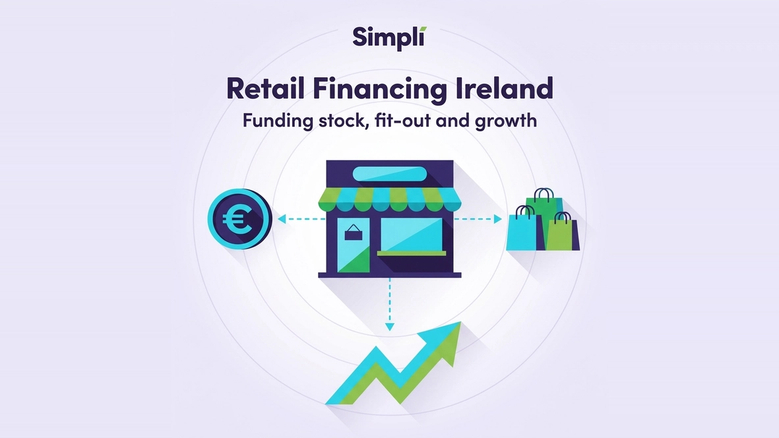
Retail margins are thin, the competition is fierce, and lenders know it, which is why so many shop owners get a polite no. What the decline misses is the rest of the picture: a proven store with steady card takings is a far safer bet than its profit-and-loss first suggests.
Let's walk through it step by step. This guide covers exactly how retail financing works in Ireland in 2026, from funding opening stock to a full fit-out to opening a second or third store, which lenders suit which situation, and what you need to walk in prepared and walk out approved.
- Opening a new retail location runs €40,000 to €120,000 once you cover fit-out, opening stock, fixtures and the staffing ramp.
- Inventory finance frees the cash trapped in stock, and you repay as the stock sells through rather than upfront.
- SBCI-backed growth loans carry an 80% government guarantee, which softens the security requirement and undercuts a standard bank term loan.
- Lenders want a debt service coverage ratio (DSCR) of at least 1.25 from your takings before they approve.
Why Retailers Get Declined (and How to Avoid It)
Your margins are tight and everyone knows it. Rent takes 10% to 15% of revenue before you have sold a thing, competition is brutal, and one poorly chosen location can wipe out the gains from a profitable flagship. Lenders read all of that as risk, and many of them stop reading there.
What they miss is that a retailer who has proven the model in one location and wants to repeat it is genuinely low-risk. You have the systems, you know your unit economics, and you have an operational playbook that already works.
If your store turns over card takings every day, that daily flow is something a lender can underwrite directly: pair it with the right merchant services setup and your point-of-sale data becomes the strongest evidence in the pack.
The same logic powers revenue-based lending, where repayments flex up and down with your sales rather than landing as a fixed charge in a quiet month.
Get this right and the decline reasons fall away. Most retail applications fail on three things: revenue overestimated for the new site, an underfunded staffing and training budget, and no clear DSCR showing the takings comfortably cover the repayment.
What Lenders Actually Look For
The metric that decides it is the debt service coverage ratio (DSCR), and thin retail margins make it the hard part. Lenders want your net operating income to cover the annual repayment by at least 1.25 times.
The €82,000 expansion loan above at €1,530 a month is €18,360 a year to service, so the lender wants to see roughly €22,950 of net profit above it.
A store turning over €22,000 a month at a typical 9% net margin makes about €24,000 a year, which clears the line but only just, which is exactly why lenders lean so hard on your card-takings data to confirm the sales are real and steady before they commit.
The compliance checklist is the same as anywhere but worth getting right early.
Revenue needs to be square, all VAT and tax returns filed and paid or under an agreed arrangement, with a current tax clearance cert to prove it, and your Central Credit Register record should be clean or clearly recovering.
Trade through a limited company and your CRO filings have to be up to date. In retail the quickest own goal is unsettled Revenue debt, so clear it before you apply rather than explaining it afterwards.
The Financing Options That Actually Work
Retail financing is not one product. The right structure depends on whether you are filling shelves, fitting out a new unit, or rolling out across three locations at once.
1. Store Expansion Loans (€40k to €120k)
Use it when you are opening a new location using a model you have already proven. The loan covers fit-out, opening stock, signage, the point-of-sale system and staffing through the ramp.
A Dublin retailer expanding to Cork financed €18,000 of fit-out and lease deposit, €35,000 of initial inventory, €5,000 of signage and displays, a €4,000 POS system, €12,000 of staff training and wages over three months and an €8,000 working capital buffer: €82,000 over five years at 6% works out at €1,530 a month.
2. Inventory Financing (€10k to €50k)
Use it when you need stock to fill the shelves but your cash is tied up. An inventory line of credit funds the opening order, and you repay as the stock sells through, typically inside 60 to 90 days.
A clothing retailer opening two locations needed €60,000 of stock, took €40,000 of inventory financing and covered the remaining €20,000 from personal savings, repaying the line as each store turned its inventory.
3. Equipment and Fixtures Loans (€5k to €30k)
Use it for shelving, display units, the POS system and security. The fixtures are the security, so you repay over three to five years and keep your cash for stock. A three-location expansion with €35,000 of total fixtures and POS financed over five years at 5.5% comes to €659 a month.
4. SBCI Growth Loans (€25k to €1m)
Use it for chain-wide expansion or a jump to three or more locations. The Strategic Banking Corporation of Ireland guarantees 80% of the loan, which eases the security demand and brings the rate below a standard bank term loan.
A retailer opening three new stores at €240,000 total borrowed the full amount over seven years at 5.5%, around €3,468 a month.
5. Working Capital Lines (€10k to €30k)
Use it to bridge the gap while a new store ramps, because the inventory is bought upfront while sales build slowly. A new store opening at 60% of target in month one draws €8,000, then repays the line by month four once sales hit 100%. You only pay interest on what you actually draw.
How the Lenders Differ
- Pillar banks (AIB, Bank of Ireland, Permanent TSB): the strictest requirements, two years of accounts, six months of business statements, a current tax clearance cert and full CRO compliance. Slow and thorough, but the best rates on a qualifying term loan, typically €30,000 to €150,000 over five to seven years at 5% to 7%.
- Alternative and fintech lenders: lighter touch, assessing affordability straight from three to six months of statement and card-takings data rather than two years of filed accounts. Faster, higher rates, and the realistic route for a store under two years old or one expanding quickly.
- SBCI-backed lenders: bank-level rates with more flexibility on security, which is why they suit first-time expanders and anyone opening a third or fourth site at €25,000 to €1m.
What You Need Before You Apply
Walk in with the last two years of P&L and sales data from your proven location; a market analysis for the new site covering demographics, foot traffic and nearby competitors; the lease agreement for the new unit; a detailed expansion plan with timeline, staffing and marketing; a 24-month cash flow forecast for the new location that shows the slow ramp honestly rather than assuming day-one maturity; and your personal credit report with a current tax clearance cert.
Lenders fund operators who clearly understand their own unit economics, so the forecast and the Location 1 numbers are doing more work than anything else in the pack.
Final Thoughts
Retail financing works the moment the lender stops seeing "retail" and starts seeing your specific, proven model. You are not a speculative startup: you have systems, an operational playbook and unit economics you can prove from real trading.
Present the Location 1 numbers, the new-site analysis and an honest ramp forecast in their language and the risk story flips in your favour.
Start with a store expansion loan for the fit-out and opening stock, add an inventory line so cash is not trapped on the shelves, and keep a working capital line on standby for the ramp.
And do not compromise on the new location to save on rent: foot traffic drives the majority of retail revenue, and a cheaper edge-of-town unit with 60% less footfall is how good operators end up funding a store that never finds its customers.
If that is on your radar too, our guide to E-Commerce Financing is a useful next read.
Frequently Asked Questions
How many locations should I open at once?
Open one at a time if this is your first expansion. Prove the model travels to a new site, then scale to three or more. SBCI growth loans become a far easier conversation once you have a second store trading.
How do I fund stock without tying up all my cash?
Use an inventory line of credit instead of paying for opening stock outright. You draw to buy the stock and repay as it sells through, usually inside 60 to 90 days, keeping your own cash free for fit-out and wages.
How much of the cost should come from my own money?
Aim for 30% of the per-location cost from your own funds and 70% borrowed, with 20% as the practical minimum. On an €80,000 store that is roughly €16,000 to €24,000 of your own money against the rest financed.