Trade Credit Ireland: Funding Stock and Suppliers (2026)

Alan Bermingham
10 Years in non banking finance
Published:
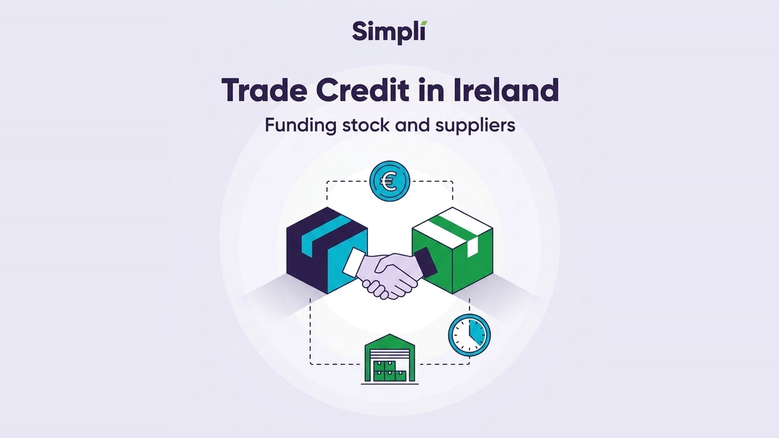
The cheapest finance most businesses will ever get is sitting with their suppliers, unused. Trade credit, thirty, sixty or ninety days to pay, funds your stock for free when you handle it well, yet many owners never ask for terms, or never build the record that earns them.
Let's look at what actually matters.
This guide covers exactly how trade credit works in Ireland in 2026, how supplier terms, trade finance and invoice finance fit together, what your "free" credit is really costing you against an early-payment discount, and how to build and grow a supplier credit line that funds your stock without draining your bank account.
- Supplier credit terms of 30 to 90 days are interest-free working capital, and most owners never ask for the better end of that range.
- Trade and import finance pays your supplier upfront so you can secure stock you could not otherwise afford to order.
- Invoice finance unlocks 80% to 90% of an unpaid invoice straight away, funding the credit you extend to your own customers.
- A 2% early-payment discount taken over 30 days is worth far more than it looks, so weigh it before you sit on "free" terms.
Why Suppliers Say No to Credit (and How to Change That)
A new supplier looks at you the same way a lender does. They are about to hand over stock and wait a month or more to be paid, and they have been burned before by the late-payment culture that runs through Irish B2B trade.
So when a supplier says no to terms, or offers a cautious €2,000 limit on a cash-on-delivery basis, it is rarely personal. They simply do not have enough evidence yet that you will pay.
That is the gap to close, and finance closes it.
When supplier terms alone cannot fund the stock you need, a revenue-based lending facility or fixed-term business loans can cover the order outright, let you pay the supplier upfront, and put you in the strongest possible position to negotiate proper credit once you have a payment record behind you.
The goal is to turn a nervous first order into a standing credit line, and the fastest route there is proving you pay early and in full.
What Suppliers and Lenders Actually Look For
Both suppliers and lenders are reading the same signals before they extend you credit. The first is trading history: how long you have been operating, and whether your order volumes are steady or erratic.
A company with two years of consistent purchasing is a far easier yes than a six-month-old startup, and the gap shows up directly in the limit you are offered.
The second is Revenue compliance.
A current tax clearance cert tells a supplier that your VAT and corporation tax returns are filed and paid, or under an agreed arrangement, and Revenue arrears are one of the quickest ways to lose credit terms you already hold.
The third is your Central Credit Register record, which any lender will check and which now sits behind most trade-credit insurance decisions too. Judgments, missed loan repayments and a thin file all push your limit down.
The fourth, and the one owners forget, is your own payment record: suppliers talk, trade-credit insurers share data, and a reputation for paying on the dot is the single most valuable asset you have when you ask for more.
The Trade Credit Options That Actually Work
Trade credit is not one product. The right structure depends on whether you are buying stock from a supplier, importing from abroad, waiting on your own customers to pay, or deciding whether to take a discount for paying early.
1. Supplier Credit Terms (30 to 90 Days)
This is the foundation, and it is interest-free. You take delivery of stock now and pay in 30, 60 or 90 days, ideally selling through the goods before the invoice falls due.
A Limerick wholesaler carrying €20,000 of stock on 60-day terms sells most of it within five weeks, pays the supplier from the proceeds, and never touches its own cash.
The skill is matching the term to your selling cycle: if your stock turns in 45 days, push for 60-day terms so the goods pay for themselves.
2. Trade Finance and Import Finance
Use it when the supplier wants paying upfront, which is common with overseas manufacturers and with any supplier who does not know you yet.
A trade finance facility pays the supplier directly, often against a purchase order or proforma invoice, and you repay the lender once the goods arrive and sell.
An importer bringing in €40,000 of stock from a European manufacturer on cash-in-advance terms uses an import line to settle the supplier, takes 60 days to land and sell the goods, then clears the facility from the sales.
It bridges the gap between paying for stock and getting paid for it.
3. Invoice Finance as a Companion Tool
Supplier credit funds what you buy. Invoice finance funds what you sell. When you extend 30 or 60 day terms to your own B2B customers, your cash is locked up in unpaid invoices, and invoice finance releases 80% to 90% of each one the day you raise it.
A distributor invoicing €30,000 a month draws roughly €24,000 to €27,000 immediately, uses it to pay suppliers early and take their discounts, then receives the balance when the customer settles.
It is the natural companion to supplier credit because it solves the other side of the same cash flow squeeze.
4. Early-Payment Discounts and the Real Cost of "Free" Credit
Supplier credit feels free because no interest line appears on the invoice. It is not free if you are turning down a discount to use it. A common term is "2/10 net 30": pay within 10 days and take 2% off, or pay the full amount at 30 days.
Skipping that 2% to hold your cash for an extra 20 days is, annualised, an effective cost north of 35%. Almost no facility we arrange is more expensive than that.
So the rule is simple: if a supplier offers a real early-payment discount and you can fund paying early, take it, even if you fund it with an invoice finance draw.
5. Building and Increasing a Supplier Credit Line
Credit lines grow through proof, not requests. Start with a modest limit, pay every invoice on or before the due date, and ask for a review after three or four clean cycles. Pay early where you can, because suppliers remember it.
Once you have a record, ask directly for a higher limit and longer terms, and bring evidence: your payment history, your filed accounts and a current tax clearance cert.
A supplier who started you on €5,000 cash-on-delivery will often move you to €25,000 on 60-day terms inside a year if every payment has landed on time.
How the Options Differ
- Supplier credit terms: the cheapest option by far, interest-free, but capped at the limit the supplier is willing to extend and dependent entirely on your payment record with them.
- Trade and import finance: pays the supplier upfront so you can secure stock you could not otherwise afford, but it carries a cost and is tied to a specific purchase rather than being an open line.
- Invoice finance: funds the credit you give your own customers rather than the credit you receive, releasing cash from unpaid invoices, and scales automatically with your sales instead of being capped.
- Early-payment discounts: not finance at all but a cost decision, and frequently the highest-return use of cash you have if the discount is genuine.
What You Need Before You Ask for Terms
Walk into a supplier or lender conversation with the same pack you would bring to a bank.
Have your filed accounts or up-to-date management figures, a current tax clearance cert, your CRO registration if you trade as a limited company, and a clean or clearly explained Central Credit Register position.
Bring a short note on your trading history and the order volumes you expect, because a supplier sizing a credit limit wants to see where you are heading, not just where you have been.
The business that asks for terms with the paperwork ready, rather than promising to send it on, is the one that gets the higher limit.
Final Thoughts
Trade credit is the working capital hiding in plain sight. Used well, supplier terms fund your stock for free, trade finance secures the orders those terms cannot reach, and invoice finance releases the cash you have tied up in your own customers.
The owners who win are the ones who treat their credit lines as an asset to be built deliberately, pay early enough to earn trust and take discounts, and line up finance before they need it rather than after a supplier has already said no.
Start by negotiating the best terms your payment record can justify, layer invoice finance over the credit you extend to customers, and keep a trade finance line on standby for the orders that would otherwise slip away.
Get the structure right and your suppliers, not your bank balance, end up funding most of your growth.
For a closely related angle, see our guide to Bridging Finance.
Frequently Asked Questions
Is supplier credit really free?
It carries no interest, but it is not free if you are passing up an early-payment discount to use it. A 2% discount for paying in 10 days is worth far more than holding your cash an extra 20 days, so weigh the discount before you default to the full term.
How do I get a new supplier to give me credit terms?
Start small, pay every invoice on or before the due date, and ask for a review after three or four clean cycles. Bring your filed accounts and a current tax clearance cert, and most suppliers will raise your limit and lengthen your terms once they have evidence you pay.
What is the difference between trade finance and invoice finance?
Trade finance pays your supplier upfront so you can buy stock, while invoice finance releases cash from the invoices you have already raised to your customers. One funds what you buy, the other funds what you sell, and many growing businesses use both together.