Working Capital Loans for SMEs in Ireland Explained (simple guide here)

Alan Bermingham
10 Years in non banking finance
Published:
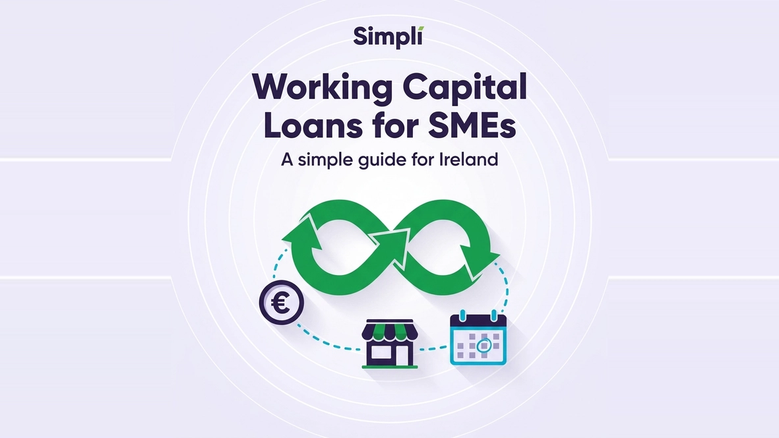
Every SME has the same problem hiding in its bank account. You pay wages this Friday, your supplier wants paying in 30 days, and your biggest customer will not pay you for 60. That stretch between money going out and money coming in is the working capital gap, and it is where most Irish SMEs feel the squeeze.
We see it every week at Simpli Finance. The business is profitable on paper, the order book is healthy, and the account still runs dry the week before payroll. That is not bad management. It is just how the operating cycle of a trading business works.
This guide explains how working capital loans for SMEs in Ireland actually work in 2026, which type of facility fits which kind of gap, and what lenders want to see before they say yes.
- Working capital loans fund the gap between paying your costs (payroll, stock, rent) and getting paid by customers, not big one-off purchases.
- Most Irish SMEs wait 30 to 60 days to get paid while their own bills fall due weekly, which is why profitable businesses still run short of cash.
- Match the facility to the gap: a credit line for seasonal dips, invoice finance for slow payers, a short-term loan for one-off pressure points.
- Lenders typically want 12 months of trading, up-to-date accounts and a clear purpose, and decisions from alternative lenders come in days.
What Working Capital Loans for SMEs in Ireland Actually Cover
A working capital loan is short-term funding for the day-to-day running of the business. Payroll, stock, supplier invoices, rent, the VAT bill that lands at the worst possible moment. It is not for buying premises or machinery. It is for keeping the engine turning while you wait to get paid.
The deals we place tell the story. A distributor buying stock ahead of a big contract. A services firm covering three payrolls while a state body processes its invoice. A retailer loading up for Christmas in October. None of them were in trouble. All of them had costs falling due before the revenue arrived.
Repayments are usually structured around your trading pattern rather than a rigid schedule, and products like revenue-based lending take that further by flexing the repayment with your monthly sales. Strong month, you pay more. Quiet month, you pay less. For an SME whose income moves around, that beats a fixed direct debit every time.
The Cash Gap: Why Profitable SMEs Still Run Short
Here is the maths nobody shows you when you start a business. Say you invoice €40,000 a month and your customers pay on 60-day terms. That means roughly €80,000 of your money is permanently sitting in other people's bank accounts. Meanwhile your wages go out weekly and your suppliers want their 30 days honoured.
Growth makes it worse, not better. Every new order means buying more stock and carrying more payroll before a cent of the new revenue lands. We have watched SMEs nearly buckle under their best-ever quarter because the cash gap widened faster than the profits arrived.
That is the specific problem working capital funding solves. You are not borrowing because the business is weak. You are borrowing against money you have already earned but have not yet received, and the right cashflow finance structure simply moves your own money forward in time.
Matching the Facility to the Gap
Working capital is not one product, and the biggest mistake we see is an SME grabbing whatever their bank offers instead of matching the facility to the shape of the gap.
Short-Term Loans for One-Off Pressure Points
A lump sum repaid over 6 to 24 months. Best for a defined, one-off need: a big stock buy, a tax bill, a bulge in payroll while a new contract ramps up. You know the repayment from day one, so it slots straight into your cashflow forecast.
Credit Lines for Recurring Dips
A business line of credit sits behind your account and you draw it only when needed, paying interest only on what you use. This is the right tool for seasonal businesses and anyone whose gap opens and closes every month. Draw €15,000 to cover the January dip, repay it through spring, and the facility costs you nothing while it sits idle.
Invoice Finance for Slow Payers
If your cash gap is caused by customers on 45, 60 or 90-day terms, the cleanest fix is to release the cash inside those invoices. Invoice finance typically advances up to 90% of an invoice value within days of issue, so payroll never depends on when a big customer's accounts department gets around to you.
Merchant Cash Advances for Card-Heavy Trades
Retailers, cafés and salons taking most of their income through the card machine can raise funding against future card sales, with repayments taken as a small percentage of each day's takings. It is quick and flexible, though pricier than a term loan, so we use it for short, sharp gaps rather than long-term funding.
Supplier Terms as Free Working Capital
Do not overlook the cheapest facility of all. Negotiating 30 to 60-day trade credit with suppliers lets you sell stock before you pay for it, shrinking the gap before you borrow a cent to cover it.
What Lenders Want to See From an SME
The good news is that working capital applications are lighter than term loan applications. From the files we submit every week, here is what actually gets an SME approved.
Twelve months of trading history is the usual floor, with turnover from around €100,000 upwards depending on the lender. Alternative lenders assess affordability straight from 3 to 6 months of bank statements, which is why they can give decisions in days while a bank is still asking for two years of accounts.
Your credit record needs to be clean or at least explained, Revenue needs to be up to date, and you need a clear answer to the question "what is this money for?" A one-line purpose like "stock purchase ahead of Q4" carries more weight than a vague request for a cushion. The full checklist is in our guide to business loan requirements in Ireland.
One thing we tell every client: apply before the gap becomes a crisis. A lender funding next month's stock buy sees a well-run business. A lender asked to cover last Friday's missed payroll sees a rescue job, and prices it accordingly.
Seasonal Dips, Payroll and the SME Operating Cycle
For a lot of Irish SMEs the gap is not random, it is seasonal. Retailers spend heavily in autumn and collect in December. Trades quieten over Christmas. Tourism and food businesses earn eight months of income in five. The costs, meanwhile, run all twelve months, and payroll is the one bill that can never slip.
The fix is to fund the pattern, not the panic. Put a standby facility in place during your strong season, when your numbers look their best and approval is easiest, and draw it only when the dip arrives. Hospitality operators do this well, and our guide to slow season finance shows how a €10,000 to €20,000 line drawn in January and repaid through summer smooths the whole year.
The same logic applies to any SME with a lumpy year. Map your worst three months, size the facility to cover payroll and fixed costs through them, and stop treating a predictable dip as an annual emergency.
Mistakes That Cost SMEs Money
After years of doing this, the same handful of mistakes keeps showing up.
Taking the first offer. Your own bank is one lender in a market of dozens, and we regularly beat the first quote an SME brings us simply by shopping the same application around.
Borrowing too much. A bigger approval is not a compliment, it is a bigger repayment. Size the loan to the gap, not to what the lender will give you.
Funding long-term assets with short-term money. A van or a machine should be on asset finance over its working life, not squeezed through a 12-month working capital loan that strangles your cashflow.
Ignoring the total cost. The headline rate is only part of the picture. Arrangement fees, drawdown fees and early repayment charges all change the real cost, so always compare the total repayable, not the advertised percentage.
Final Thoughts
Working capital loans for SMEs in Ireland are not a sign of weakness. They are how trading businesses bridge the built-in gap between paying costs today and getting paid next month. The SMEs that handle it best treat the gap as a known, measurable number and put the right facility against it before it bites.
Start by mapping your own cycle: when money leaves, when it lands, and how wide the gap gets in your worst month. Then match the tool to the shape of the problem, a credit line for recurring dips, invoice finance for slow payers, a short-term loan for one-off pressure. For the broader picture of what is available, our full guide to working capital loans in Ireland covers every option in the market.
And if your income moves with your sales, a facility that flexes with revenue is usually the most comfortable fit of all.
Frequently Asked Questions
What interest rate will my SME pay on a working capital loan?
It depends on your trading history, credit record and the facility type. Bank facilities are cheapest but slowest, while alternative lenders charge more for speed and flexibility. Always compare the total repayable including fees, not just the headline rate, because arrangement and drawdown fees change the real cost.
How quickly can my SME access funds after approval?
With alternative lenders, funds typically land one to three days after approval, and sometimes faster if your documents are ready. Missing paperwork is the most common cause of delay, so have your bank statements and up-to-date accounts prepared before you apply.
Are there government supports for SME working capital in Ireland?
Yes. SBCI-backed schemes and Microfinance Ireland loans offer lower rates or lighter security requirements for qualifying SMEs. The paperwork is heavier and approval slower than the alternative market, but for a planned need rather than an urgent gap, the savings are often worth the wait.
Can a startup get a working capital loan in Ireland?
It is harder but possible. Most lenders want 12 months of trading, so younger businesses lean on personal guarantees, strong projections or Microfinance Ireland, which is designed for early-stage firms. Once you pass the 12-month mark, the whole market opens up.