Angel Investment Ireland: Raising Your First Round (2026)

Alan Bermingham
10 Years in non banking finance
Published:
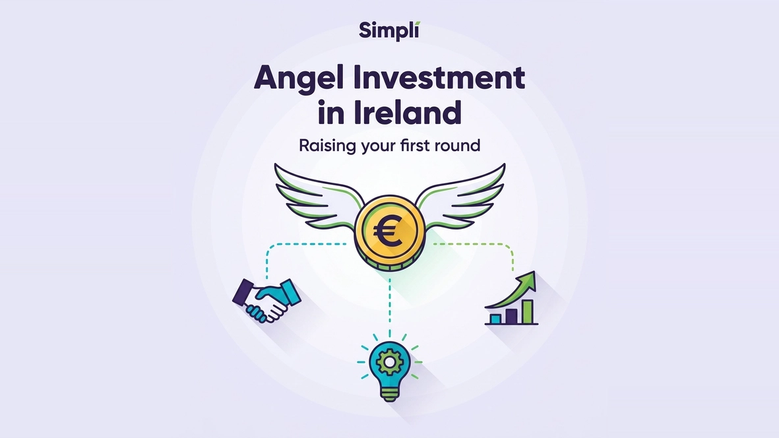
The first cheque is the hardest to land. Most founders chasing angel money pitch the product and forget the investor, who is weighing a high chance of losing everything against the slim one of a real return, and wants to see that you understand that bet as clearly as they do.
Let's break it down properly. This guide covers exactly how angel investment works for Irish startups in 2026, what angels look for before they write a cheque, how valuation and dilution actually play out, and how the EII Scheme and Enterprise Ireland change the maths in your favour.
- Irish angel cheques typically land between €25,000 and €250,000, often pooled across a syndicate rather than from one person.
- Most founders give up 10% to 25% of equity in a first round, so guard your cap table from day one.
- The EII Scheme lets investors claim up to 40% income tax relief, which makes your raise far easier to close.
- HBAN and Enterprise Ireland co-investment can match angel money euro for euro, doubling your round without doubling dilution.
Why First-Time Founders Struggle to Raise (and How to Avoid It)
Most first-time founders walk into the room with the wrong pitch. They lead with the product, talk for twenty minutes about features, and never once explain how the angel gets their money back. An angel is not buying your software.
They are buying a slice of a business they believe could be worth ten times more in five years, and if you cannot tell that story, the meeting is over before it starts.
The other trap is raising equity for the wrong reasons.
If you have predictable monthly revenue and just need to smooth cash flow or fund stock, you should be looking at revenue-based lending or fixed-term business loans before you ever hand over a share of the company.
Debt is repaid and gone; equity is permanent. We have seen founders give away 20% of their company to cover a working capital gap a €40,000 term loan would have closed.
Get this right and the rest follows. The founders who raise well are the ones who know exactly why they need equity, exactly how much they need, and exactly what milestones that money buys them on the road to the next round.
What Angels Actually Look For
Angels back people first. With no trading history to underwrite, the team is the asset, so they want founders who understand the market deeply, have skin in the game, and can clearly show why this particular team wins.
After the team comes traction: even a small amount of real revenue, a waitlist, or a signed pilot tells an angel that someone other than you believes in this.
Then market size, because a brilliant business in a tiny market caps the return, and angels need the winners to be very big to cover the losers.
The fourth thing is a realistic valuation. Price your seed round like a Series B and experienced angels walk. They have seen what overpricing does to a cap table two rounds later.
Unlike a bank loan, equity is not gated by your Revenue compliance or your Central Credit Register file, an angel is taking a long-term bet, not assessing affordability, but your books still need to be clean.
A messy company that has not filed with the CRO, has tax arrears, or cannot produce a tidy cap table signals that the same carelessness will follow the angel's money, and that kills deals at the due diligence stage just as surely as a weak pitch kills them at the first meeting.
How Angel Investment Works in Ireland
Angel investment in Ireland has a real ecosystem behind it, and the founders who use it well raise faster and on better terms. Here is how the pieces fit together.
Finding Angels Through HBAN
The Halo Business Angel Network (HBAN) is the main organised route to angel capital in Ireland.
Rather than chasing individual investors cold, you pitch into HBAN syndicates that pool several angels around a sector or region, which is how a single round can total €150,000 or more from cheques that individually sit in the €25,000 to €50,000 range.
A syndicate also brings a lead investor who runs the due diligence and sets terms, so you negotiate with one experienced party rather than ten nervous ones.
Warm introductions still matter, so work your accountant, your local enterprise office and other founders, but HBAN is where most first-time Irish founders should start.
The EII Scheme Tax Relief
The Employment Investment Incentive (EII) Scheme is the single biggest reason an Irish angel says yes.
It lets a qualifying investor claim income tax relief of up to 40% on what they put in, which means a €50,000 investment can cost an angel as little as €30,000 after relief.
That changes the risk calculation entirely and makes your round materially easier to close.
The catch is that your company has to qualify, the shares have to be held for at least four years, and the paperwork is exacting, so get your accountant to confirm EII eligibility before you start pitching, not after.
Angels will ask whether the round is EII-qualifying in the first meeting.
Enterprise Ireland Co-Investment
Enterprise Ireland can effectively double your round. Through its co-investment activity and the High Potential Start-Up (HPSU) route, EI backs ambitious, export-focused companies alongside private angels, often matching the angel money roughly euro for euro.
So a €125,000 angel commitment can become a €250,000 round with the same dilution to you, because EI typically invests on the same terms the angels negotiate.
If your business is software, manufacturing or internationally traded services with real scale ambition, the HPSU path is worth building your raise around from the outset.
Cheque Sizes and Valuation
Plan for individual cheques of €25,000 to €250,000, with most first rounds totalling somewhere between €150,000 and €500,000 once a syndicate and Enterprise Ireland are stacked together.
Valuation at this stage is a negotiation, not a science: it is driven by your traction, your team, the size of the round and what comparable Irish deals have priced at recently. Resist the urge to optimise for the highest possible number.
A sensible valuation that leaves room for the next round to be an up round protects you far more than a vanity figure that boxes you in.
What You Give Up
In exchange for the cheque you give up equity, usually 10% to 25% in a first round, plus a seat or observer rights on your board and a set of investor protections written into a shareholders' agreement.
Those terms, things like pre-emption rights, drag-along and tag-along clauses, and information rights, are normal, but read every line and take advice.
You are not just selling shares; you are taking on a partner who will sit across the table at every major decision for years, so the fit matters as much as the cash.
Angel Investment vs Debt
- Angel equity: no repayments and patient capital, plus expertise and contacts, but you permanently surrender a share of the company and a say in how it is run. Right when you have no revenue, high growth ambition and a long road to profitability.
- Revenue-based finance: you repay a fixed percentage of monthly sales, so payments flex with your cash flow and you keep 100% of your equity. Right when you have predictable recurring revenue and need growth capital without dilution.
- Term loan: a fixed sum repaid over a set period at a set rate, the cheapest money of the three if you can service it. Right when you have steady cash flow and a clear, fundable use of funds rather than a pre-revenue bet.
What You Need Before You Raise
Walk in with a pitch deck of ten to fifteen slides that leads with the problem, the team and the size of the prize; a financial model showing 18 to 24 months of runway and the milestones the money buys; a clean, simple cap table; and confirmation from your accountant that the round is EII-qualifying.
Have your CRO filings up to date, your tax affairs in order and a data room ready with contracts, IP assignments and accounts, because the angel who likes you will move to due diligence fast and a disorganised data room stalls deals that should have closed.
Final Thoughts
Angel investment is the right tool for a specific job: an early-stage, high-growth business that cannot yet be financed by debt and needs both money and a guiding hand.
Used well, with HBAN to find the syndicate, the EII Scheme to sweeten the deal and Enterprise Ireland to amplify the round, it is one of the most powerful starts an Irish founder can give a company.
But it is not the default. Before you give away a quarter of your business, be honest about whether you actually need equity or just need cash, because for a lot of the founders we meet, the cheaper, non-dilutive answer was a loan all along.
Raise equity for the things only equity can fund, protect your cap table like it is the company itself, and pick the angel as carefully as the angel picks you.
Weighing more than one route? Our guide to Venture Capital is a good companion to this one.
Frequently Asked Questions
How much equity should I expect to give away in a first round?
Most Irish founders give up 10% to 25% in a first angel round. Below that you may be underraising; well above it and you risk having too little equity left to motivate the team and fund future rounds.
Does my company have to qualify for the EII Scheme to raise from angels?
No, but it helps enormously. EII eligibility lets investors claim up to 40% income tax relief, which makes your round far easier to close. Confirm qualification with your accountant before you pitch, because angels will ask.
Should I raise equity or take a loan instead?
If you already have predictable revenue and need working capital or growth funding, a term loan or revenue-based finance is usually cheaper because you keep your equity. Raise from angels when you are pre-revenue, high-growth and not yet fundable by debt.