Bridging Finance Ireland: Short-Term Funding That Works (2026)

Alan Bermingham
10 Years in non banking finance
Published:
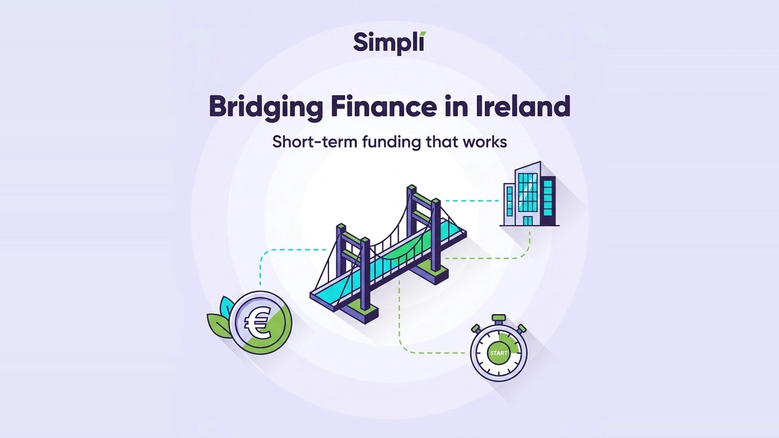
Bridging finance is a scalpel, not a sticking plaster, and used wrong it is an expensive way to make a problem worse. Used right, with a clear exit and a real deadline, it unlocks deals that no term loan could ever move fast enough to catch.
So here is the real picture.
This guide covers exactly how bridging finance works in Ireland in 2026, the difference between a property bridge and a business bridge, how the monthly rates and the loan to value actually stack up, and the one thing that decides whether a bridge is a smart move or a slow-motion mistake: your exit.
- Bridging finance is short-term funding, usually 6 to 24 months, designed to be repaid in full from a defined event rather than month by month.
- Rates are quoted monthly, typically around 0.6% to 1.5% per month, so the annual cost is high and the term should be as short as the deal allows.
- Lenders care about your exit above everything else: a property sale or a refinance onto a longer term loan that clears the bridge.
- A closed bridge with a contracted exit prices far better than an open bridge where the exit is still a plan, not a date.
Why Bridging Finance Gets Misused (and How to Avoid It)
The appeal of a bridge is speed. A property comes up, a deal needs to close, the bank is weeks away from a decision, and bridging fills the gap. That same speed is what gets owners into trouble.
They take the bridge to solve a timing problem, then discover they never had a clean way to pay it back.
Without a clear exit, the fixed-term business loans that should have refinanced the bridge into affordable longer-term funding never materialise, and the monthly cost quietly compounds into something painful.
The fix is to start at the end. Before you draw a cent, you should be able to name the exact event that repays the bridge and roughly when it lands: the sale completing, the mortgage drawing down, the term loan approving.
Bridging works beautifully when it covers a known gap between now and a contracted future. It works badly when it covers a hope.
Get that right and the misuse disappears.
Most bridges that go wrong fall down on the same thing: an exit that was always an aspiration rather than a plan, asset-backed deals that lean on asset finance when a refinance was assumed, or a term set so tight that a normal conveyancing delay tips the loan into default and penalty pricing.
What Bridging Lenders Actually Look For
The exit comes first, second and third. A bridging lender is underwriting how they get repaid, not how you service the loan month to month, because most bridges roll or retain the interest rather than collecting it monthly.
Show them a signed sale contract or a mortgage offer in principle and the deal prices keenly. Show them a vague intention to sell at some point and they either decline or price for the risk.
After the exit, they want security and a sensible loan to value. Most Irish bridging sits at or below 70% LTV against property, sometimes lower on land or specialised assets, because the lender needs headroom to recover if the exit slips.
On top of that they want Revenue compliance, with VAT and tax returns filed and paid or under an agreed arrangement, and a Central Credit Register record that does not flag recent missed payments.
The exit sells the deal, but compliance and clean credit keep it alive.
The Bridging Options That Actually Work
Bridging is not one product. The right structure depends on what you are bridging towards and what is securing it.
1. The Property Bridge
Use it when you need to buy or hold a property before longer-term funding is in place. A common case is buying a commercial premises at speed, then refinancing onto a standard mortgage once the building is tenanted or the accounts support it.
The property is the security, the LTV typically tops out around 70%, and the exit is either the sale of another asset or the mortgage drawdown that clears the bridge.
2. The Business or Commercial Bridge
Use it to cover a working-capital or transaction gap inside a trading business. A company waiting on a large contracted payment, a VAT refund, or the completion of a sale of part of the business can bridge against that incoming event.
The asset securing it might be debtors, stock or equipment rather than property, and the exit is the cash event itself rather than a refinance.
3. Auction Finance
Use it when you buy at auction and the fall of the hammer commits you to completing in roughly four weeks, far faster than any mortgage.
Auction finance is a bridge structured around that deadline: it funds the purchase quickly, then you refinance or sell to repay. The discipline here is non-negotiable, because the completion date is fixed and missing it can cost your deposit.
4. Open vs Closed Bridge
A closed bridge has a defined, usually contracted exit and a known repayment date, such as a sale that has already gone sale agreed with contracts signed.
An open bridge has an intended exit but no fixed date, such as a property you plan to sell but have not yet listed. Closed bridges price meaningfully better and are easier to get approved, because the lender can see the cash coming.
If you can turn an open bridge into a closed one by lining the exit up first, you will pay less for the money.
5. The Refinance Exit
Use this framing whenever the bridge is buying you time to qualify for cheaper, longer funding. The bridge holds the position now, and a term loan or mortgage clears it once your accounts, tenancy or planning status support a mainstream lender.
The whole strategy lives or dies on whether that refinance is realistic, so it is worth getting the longer-term lender comfortable in principle before the bridge is even drawn.
How Bridging Differs From a Term Loan
- Repayment shape: a term loan is repaid in monthly instalments over years; a bridge is repaid in one lump from a single event, often with the interest rolled up rather than paid monthly.
- Term: a term loan typically runs three to seven years; a bridge runs 6 to 24 months and is meant to be settled early if the exit lands early.
- Pricing: a term loan is quoted as an annual rate; a bridge is quoted monthly, so a 1% monthly rate is a far bigger annual cost than it looks at first glance.
- What gets underwritten: a term loan is underwritten on your ability to service it from trading; a bridge is underwritten on the exit that repays it.
- Speed: a bridge is built for speed and can move in days where a term loan takes weeks, which is exactly why it costs more.
What You Need Before You Apply
Walk in with the exit defined in writing: a sale contract, a mortgage offer, a term loan approval in principle, or a contracted payment date.
Bring evidence of the security and a realistic valuation, your Revenue position with a current tax clearance cert, your personal credit picture, and a short note setting out the timeline from drawdown to repayment.
The single most important document is whatever proves the exit, because that is the document the lender is really lending against.
Final Thoughts
Bridging finance is a precision tool, not a comfort blanket.
Used to span a known gap between now and a contracted event, it lets Irish businesses move at the speed deals actually happen and is often the difference between landing a property and watching it go to someone faster.
Used to paper over a problem with no clear way out, it is one of the most expensive mistakes you can make.
So treat the exit as the whole point, keep the term as short as the deal allows, and have the longer-term funding lined up before you draw.
And know when bridging is the wrong tool: if you need money for years rather than months, if the repayment depends on a sale that has not been listed or a refinance you may not qualify for, or if a normal term loan would do the job, take the term loan.
The right bridge is short, secured, and already pointed at the exit before it starts.
For a closely related angle, see our guide to Property Development Finance.
Frequently Asked Questions
How is bridging interest actually charged?
Most bridges quote a monthly rate, often around 0.6% to 1.5%, and many roll the interest up so you settle it all when the loan is repaid rather than paying monthly. Because it is monthly, keep the term as short as the exit allows.
What is the difference between an open and a closed bridge?
A closed bridge has a contracted exit and a known repayment date, so it prices better and approves faster. An open bridge has an intended exit but no fixed date, which the lender treats as higher risk and prices accordingly.
When is bridging the wrong tool?
When you need funding for years rather than months, when the exit is a hope rather than a contracted event, or when a standard term loan would do the same job at a fraction of the cost. In those cases a longer-term loan is the better answer.