Property Development Finance Ireland: From Site to Sale (2026)

Alan Bermingham
10 Years in non banking finance
Published:
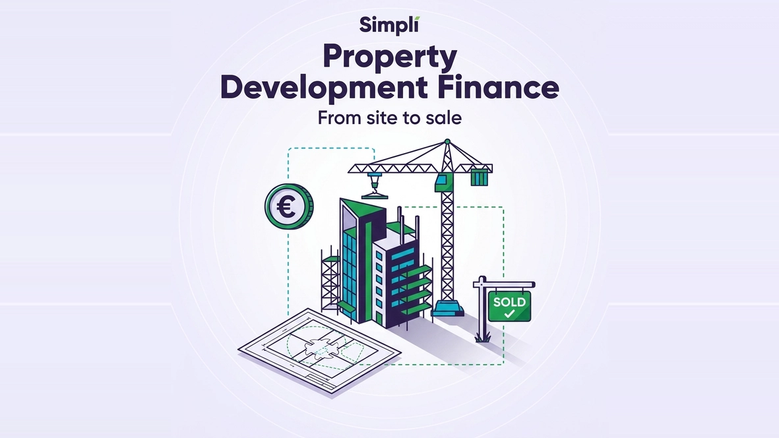
More schemes die for lack of the right funding structure than for lack of demand. A site with planning and a credible exit is highly fundable in Ireland, but developers lose months, and sometimes the deal, by approaching the wrong lender for the wrong stage of the build.
Let's get into the detail. A site with full planning permission, a detailed cost plan and a credible exit is one of the most fundable things in the market, because you have an asset, you have demand, and you have a clear path to cash.
This guide covers exactly how property development finance works in Ireland in 2026, which lenders suit which stage of a scheme, and what you need before you ask anyone to fund a brick of it.
- Lenders typically fund 60% to 70% of a scheme and expect the developer to put in 30% to 40% equity from the start.
- Senior development debt is interest-only during the build and runs at roughly 5% to 8%, repaid from sales or refinance on completion.
- Mezzanine finance sits between equity and senior debt at 8% to 12% and tops up the stack without diluting your control.
- Full planning permission, conservative pre-sales of 30% to 50%, and Revenue tax clearance are what turn a viable scheme into a funded one.
Why Developments Get Declined (and How to Avoid It)
Most schemes fall over for the same handful of reasons, and almost none of them are about whether the houses will sell. Construction costs come in 20% over the budget that was built on €100 per square foot when the real number was €120 to €140.
Sales prices were pitched at the top of the market and the market moved between planning and completion. Outline planning got treated as if it were full permission, then an appeal or a fistful of conditions added cost and months.
Or the facility ran for 18 months when the build needed 24, and the money ran out with the roof half on.
Get those four things right and the decline reasons disappear.
Price the build off three contractor estimates rather than one optimistic figure, carry a real 10% to 15% contingency, treat conservative sales projections as a feature, and confirm the facility covers the full programme plus a buffer before you sign.
A clean cost plan and a sensible exit are what get a scheme funded with fixed-term business loans on the senior debt rather than knocked back. And where a scheme needs plant or fit-out kit, asset finance keeps that cost off the development facility entirely.
What Lenders Actually Look For
The first thing a lender works out is your equity. The market norm is 30% to 40% of total scheme cost from the developer, with 60% to 70% borrowed, and that equity has to be genuinely yours and in place at the start rather than promised from the first sales.
On a €2.6 million scheme, that is roughly €1 million of your own money before the senior debt does anything.
After equity, it is the appraisal that does the talking: gross development value (GDV) against total cost, with a margin that survives a softer market. They want full planning permission and the conditions priced in, not outline consent that can still move.
They want Revenue compliance, with VAT and tax returns filed and paid or under an agreed arrangement, a clean Central Credit Register record and full CRO registration for the SPV or company carrying the scheme.
And above all they want the exit: pre-sales of 30% to 50%, a refinance plan, or a hold-and-let strategy that a valuer will stand behind.
Revenue arrears and a vague exit are two of the most common reasons a perfectly viable scheme gets knocked back, so clear both before you apply.
The Financing Options That Actually Work
Development finance is not one product. The right structure depends on whether you are buying a site, funding the build, bridging a gap to sale, or refinancing a finished scheme.
Development and Senior Debt Loans (€100k to €1m+)
Use it to fund a scheme from acquisition through to completion. You borrow against property value and project feasibility, the facility is interest-only during the build, and you repay from sale proceeds or a refinance at the end.
A Dublin residential scheme of 20 units runs €300,000 for the land, €2.4 million of construction, €150,000 of professional fees and a €285,000 contingency, for a total around €3.135 million.
With 40% developer equity of €1,254,000, the senior development loan covers the remaining 60%, roughly €1.881 million at 6.5% interest-only.
Land Acquisition Loans (€50k to €500k)
Use it to buy a site with planning permission or genuine development potential before the full development facility is in place. You borrow to purchase the land and repay once you secure development funding or refinance.
A typical case is a two-hectare plot with outline planning bought for €200,000, financed at 6.5% over 18 months while you line up the build funding and partners.
Bridging Finance (€50k to €1m+)
Use it when you need cash before a scheme completes or sells. It is short-term, usually 6 to 24 months, bridging the gap between a completion and a sale, or between selling one project and buying the next.
A developer selling a finished scheme to an investor with completion six months out, but needing cash now, would take a bridging loan at 7% to 8% for those six months and clear it on completion.
Refinance Loans (€500k to €3m+)
Use it once the scheme is built and the units are sold or let, to roll a short, expensive development facility into longer and cheaper money.
A completed 20-unit scheme with 15 units sold and 5 retained as rentals might refinance €1.5 million at 4.5% over 20 years, dropping the rate sharply now that the construction risk is gone.
Mezzanine Finance (€50k to €500k)
Use it when you need to top up the capital stack but do not want to dilute your equity any further. Mezzanine sits between equity and senior debt, carries a higher rate of 8% to 12%, and preserves your control of the scheme.
On a project that is 80% senior debt and 20% equity needing another 10%, mezzanine at 10% fills that slice without bringing in a new equity partner.
How the Lenders Differ
- Pillar banks (AIB, Bank of Ireland): the strictest on security and track record, lending roughly €500k to €3m at 50% to 70% LTV and 5.5% to 7%. Slow and thorough, but the keenest rates for an experienced developer with a clean appraisal and proven exit.
- Specialist development lenders: more comfortable with construction risk and drawdown schedules, funding €100k to €5m at 60% to 75% LTV and 6% to 8%. Faster and more flexible on programme, which suits schemes the banks find too involved.
- Mezzanine providers: the top-up specialists, writing €50k to €500k at 8% to 12% to bridge the gap between your equity and the senior debt without taking ownership in the scheme.
What You Need Before You Apply
Walk in with a development appraisal from a surveyor showing GDV against total cost; full planning permission with the conditions priced in; detailed construction estimates from contractors rather than a single rule-of-thumb figure; conservative sales and lettings projections; your track record as a developer where you have one; CVs for the professional team covering the architect, engineer and quantity surveyor; a 24-month cash flow forecast; and a clear exit strategy of sales, refinance or hold.
Lenders fund developers who plainly understand their own numbers, so the appraisal and the exit are doing more work than anything else in the pack.
Then take it to two or three lenders and negotiate the drawdown schedule, the interest-only terms and the exit flexibility rather than accepting the first sheet.
Final Thoughts
Property development finance is available the moment you have planning permission, a detailed cost plan and an exit a lender can believe.
The whole game is showing them honest costs, conservative projections and a strong route to cash through pre-sales or a proven market.
Structure the funding in stages, because land acquisition, construction and completion each have different lenders and different rates, and there is no prize for forcing one facility to do all three jobs.
Build the contingency in because timelines slip and costs rise, and treat the equity requirement as fixed rather than something to negotiate down: 30% to 40% of the scheme is the real entry ticket, and it is underfunding, not weak demand, that stalls most schemes mid-build.
Get the appraisal right, line up the right lender for each stage, and a scheme that looked unfundable on Monday is funded by the time the foundations go in.
Plenty of owners look at this alongside Bridging Finance, which we cover in a separate guide.
Frequently Asked Questions
Can I fund a development without pre-sales?
It is harder and slower. Pre-selling 30% to 50% of the units gives the lender confidence in the exit and moves the approval along, because they can see exactly how the senior debt gets repaid.
What happens if the construction runs over?
Carry a 10% to 15% contingency and negotiate a contingency facility from the lender at the outset. Document every delay as it happens, because lenders extend far more readily for a developer who saw it coming than one who went quiet.
Should the loan be interest-only or amortising?
Interest-only during the build keeps your cash in the project while nothing is selling, then you refinance to an amortising loan once the units are sold or let and the rate drops.